


NautilusEQ- Equine Underwater Treadmill
Exceptional equine aquatic therapy begins with the NautilusEQ.
The NautilusEQ underwater treadmill’s robust design creates a special exercise environment that’s accessible for horses and assistants alike. Select the Nautilus for cutting-edge horse hydrotherapy at its finest.
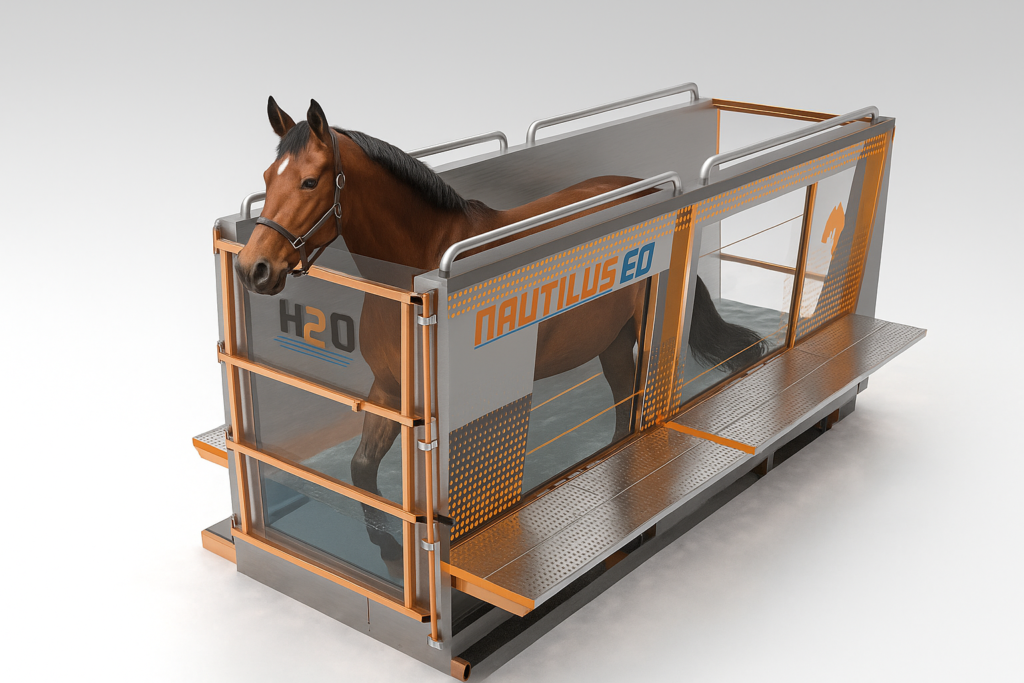
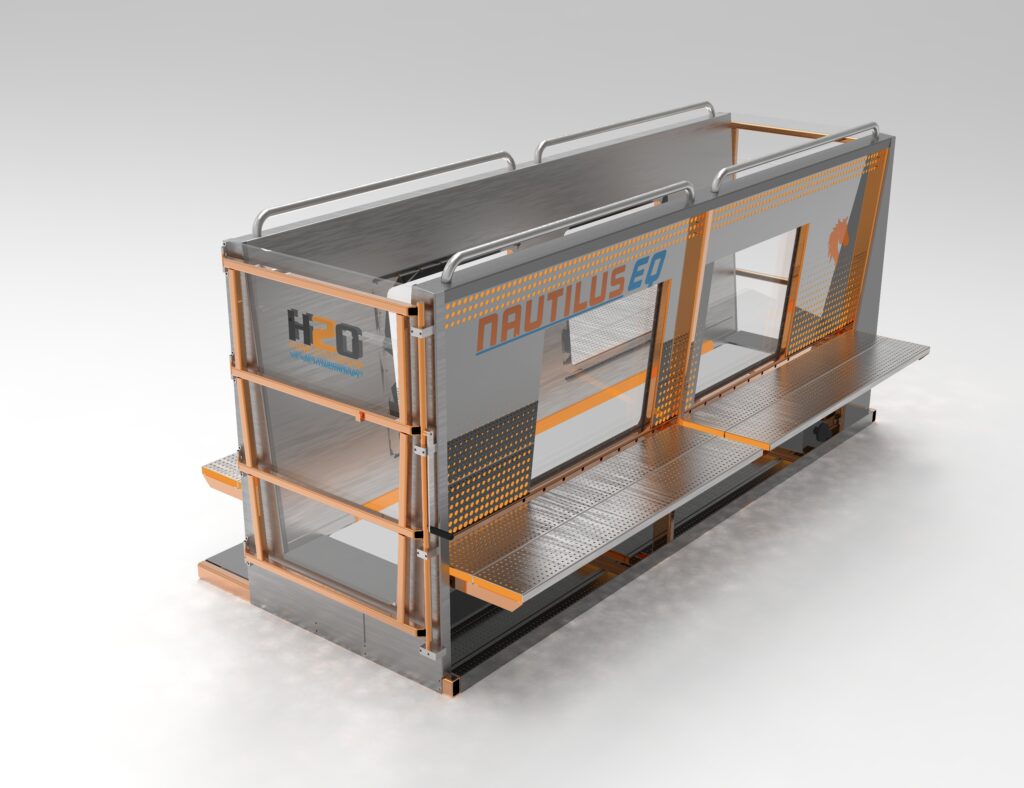
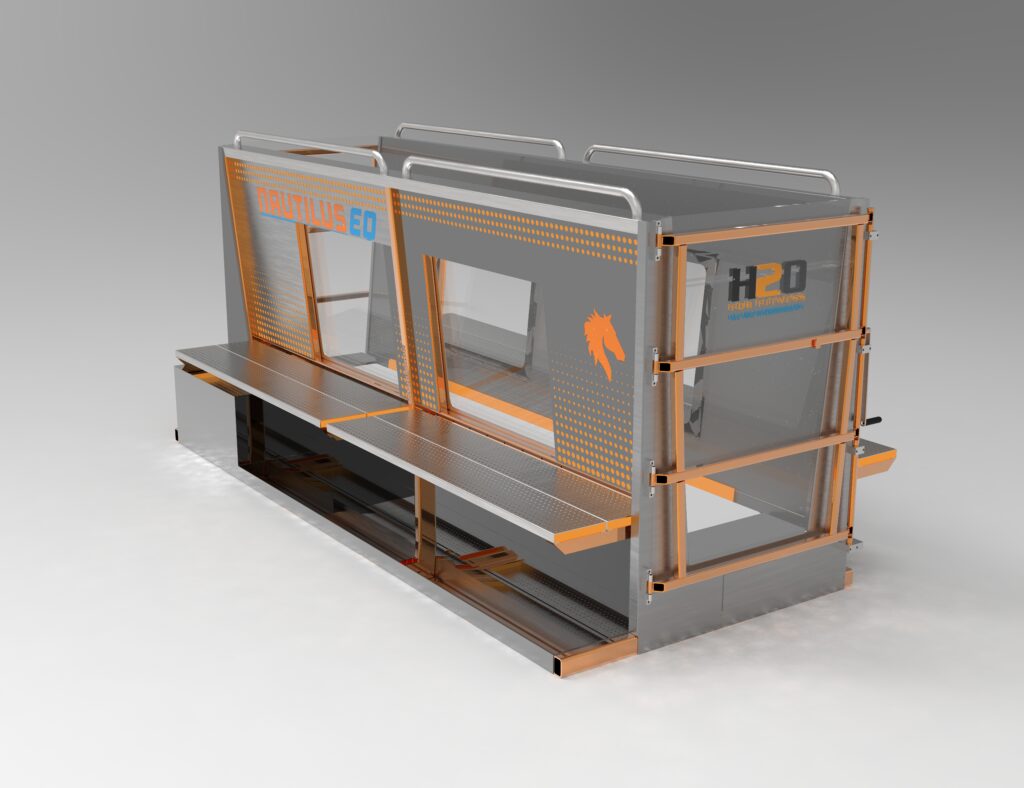

Nautilus EQ
Carefully crafted for space and efficiency, the NautilusEQ underwater treadmill streamlines equine hydrotherapy. Our unit is built to last, so every horse can achieve their goals for years to come.
The Nautilus
Hydrotherapy Benefits: The NautilusEQ decreases limb loading, allowing the horse to exercise with confidence. The special properties of water create a unique environment for healing and improved outcomes.
Rehabilitation and Recovery: Low-impact exercise for post-operative rehabilitation and after tendon, ligament, or joint injuries.
Wellness and Stamina: Create challenging workouts for enhanced cardiovascular outcomes and strength building.
Weight Control: Better manage weight with comfortable and consistent exercise.

FAQs About Equine Underwater Treadmills
What is equine hydrotherapy?
Equine hydrotherapy is a form of horse aquatic therapy utilizing the properties of water for rehabilitation, recovery, and/or conditioning.
What is equine hydrotherapy using an underwater treadmill?
An underwater treadmill for equine hydrotherapy is a controlled form of exercise in water where a horse walks or trots on a submerged treadmill belt inside a water-filled chamber. Equine underwater treadmills can help reduce weight-bearing stress while encouraging controlled movement and muscle engagement.
What are the benefits of equine exercise equipment like an underwater treadmill?
The benefits of an underwater treadmill for horses include reduced limb-loading, enhanced joint range of motion, improved muscle strength and symmetry, enhanced postural stability, and low-impact cardiovascular conditioning that can improve aerobic capacity. Water provides buoyancy and resistance, allowing horses to exercise in an environment that can reduce stress on the limbs and joints while still challenging the muscles.
How does hydrotherapy help horses recover from injury?
Horse hydrotherapy can enhance recovery by allowing controlled, low-impact movement while reducing the amount of weight placed on the horse’s limbs. The buoyancy of water decreases loading, while water resistance encourages muscle activation and deliberate movement. Depending on the injury and rehabilitation plan, an underwater treadmill may be incorporated into a comprehensive program designed by a veterinarian or rehabilitation professional.
What conditions can benefit from an equine aquatic treadmill?
An underwater treadmill may be used as part of equine rehabilitation programs for:
- Orthopedic injuries
- Soft-tissue injuries to tendons and ligaments
- Kissing spines (overriding dorsal spinous processes)
- Post-surgical recovery and reconditioning, especially from arthroscopy
- Osteoarthritis and/or joint conditions
- Muscle weakness or atrophy
- Gait abnormalities or asymmetry
- Neurologic conditions
Additionally, it can be used for conditioning, weight loss, and building topline strength for healthy horses.
What is the difference between an underwater treadmill and swimming for horses?
An underwater treadmill offers more control over a horse’s walking environment, and the horse maintains contact with a moving treadmill surface throughout the session with some buoyancy. The depth of the water and speed can be adjusted for gait patterning that is appropriate for the horse’s needs and capabilities. Swimming offers full flotation with different muscle recruitment, leading to less controllable limb movement. The two forms of hydrotherapy can serve different purposes and may be selected based on the horse’s rehabilitation or conditioning goals.
Is underwater treadmill exercise safe for horses?
Yes, underwater treadmill exercise is generally safe for horses and many equine rehabilitation cases when properly supervised by trained professionals and tailored to the individual. Horses should be introduced to the equipment gradually, with appropriate monitoring for fatigue or abnormal gait throughout each session.
Which horses should not use an underwater treadmill?
Equine hydrotherapy in the form of underwater treadmill exercise is contraindicated in horses with open wounds or skin infections, unhealed surgical incisions, acute joint inflammation or infection, unstable fractures, non-weight-bearing lameness, severe neurological deficits or ataxia, uncontrolled respiratory or cardiac disease, fever, or extreme fear/panic around water. Acute tendon ruptures or rapidly worsening swelling also warrant delay until cleared by a veterinarian.
What water depth is used in equine underwater treadmill exercise?
Water depth is modified for the specific horse to change the amount of buoyancy, resistance, and limb loading experienced. Deeper water generally provides greater buoyancy and resistance for earlier stages of rehab. Lower water levels allow more weight-bearing for higher muscle activity and joint mobility. Adjusting water depth allows professionals to customize the exercise according to the horse’s condition, stage of recovery, fitness level, and treatment goals.
Can an underwater treadmill be used for conditioning healthy performance horses?
Yes, an equine underwater treadmill can be used to improve horse conditioning, strength, muscular endurance, and cardiovascular fitness in healthy horses. Water creates resistance that requires the horse to work against the movement of the water, while buoyancy can reduce concussion compared with certain forms of land-based exercise. This makes hydrotherapy a valuable complement to a broader training and conditioning program.
How much does equine water treadmill therapy cost?
A typical 30-minute session costs around $75 per session. Multi-session packages can be offered in packages of 5 or 10 sessions to reduce per-session pricing, or a monthly price plan can be devised for ongoing treatment. Pricing varies widely by state, facility, whether veterinary oversight is included, and any add-ons such as assessment or complementary therapies.