


Disclaimer: H2O For Fitness regularly implements design changes and improvements to its products. Accordingly, all images and videos may not be an exact representation of current product lines or features. Please contact H2O For Fitness with any questions.
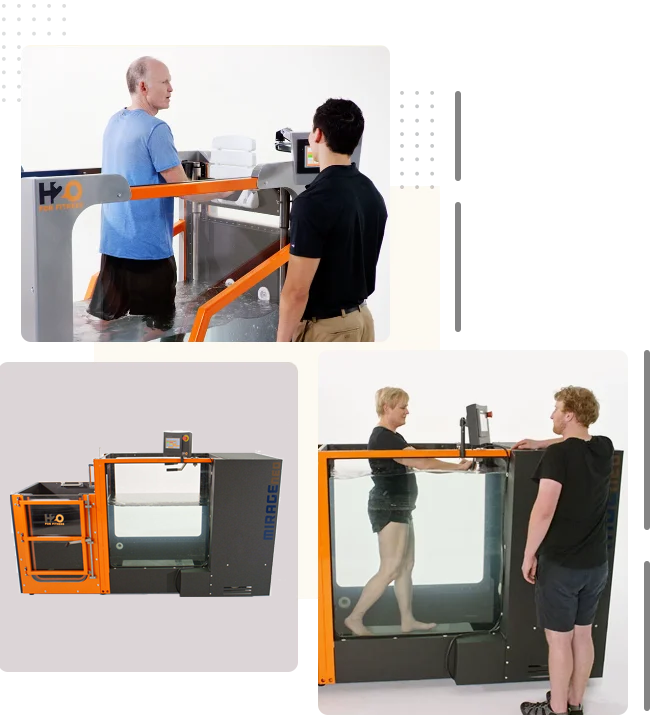
Engineered with the end-user in mind, Mirage treadmills are ideal for physical therapy/rehabilitation, athletic training/conditioning, and low-impact exercise for people of all ages and abilities. Choose from a variety of sophisticated options to create the ideal aquatic therapy experience you desire.
Mirage NEO

The Mirage –
HUMAN UNDERWATER TREADMILL
The Mirage exhibits the finest in underwater treadmill technology and design when it comes to human hydrotherapy.
Engineered with the end-user in mind, Mirage treadmills are ideal for physical therapy/rehabilitation, athletic training/conditioning, and low-impact exercise for people of all ages and abilities. Choose from a variety of sophisticated options to create the ideal aquatic therapy experience you desire.

MIRAGE NEO
Designed with the utmost care, the Mirage NEO minimizes the amount of space required in order to provide the type of hydrotherapy a person deserves. This compact, dual chamber unit is not only affordable but is also functional making this a great option in the world of human underwater treadmills.

MIRAGE PRO
With the best in human aquatic therapy, the Mirage PRO supplies a comfortable and efficient exercise environment to fit everyone’s needs. This unit is built to your specifications allowing you to offer a wide range of hydrotherapeutic workout
sessions.



Hydrotherapy Benefits
Utilizing the innate properties of water, the Mirage enhances a person’s physical therapy by allowing him or her to confidently exercise in a controlled, comfortable environment easing recuperation from surgery or injury. Recovery time can be decreased while creating better results.
Provides a low impact, unintimidating exercise environment for all ages and conditions.
Build muscle and cardiovascular endurance with customizable workouts.
Treatment options for Myelopathies, Osteoarthritis, Dysplasia, disc disease, neurologic issues, etc.
Frequently Asked Questions About Hydrotherapy Treadmills
What is underwater treadmill therapy and how does it differ from pool hydrotherapy?
Underwater treadmill therapy harnesses the properties of water, such as buoyancy and resistance, merged with a treadmill for orderly gait training and low-impact rehab exercise. It offers a more controlled environment than hydrotherapy in an aquatic therapy pool. Unlike a pool, you can control the speed, water depth, and even incline for appropriate weight-bearing and exercise intensity.
What conditions respond best to aquatic physical therapy?
Aquatic physical therapy, also called aquatic treadmill rehabilitation or hydrotherapy exercise, is particularly effective for patients with orthopedic injuries (post-surgical knee, hip, or ankle replacement rehab), neurological conditions (therapy for stroke recovery, MS, Parkinson’s disease, spinal injuries), chronic pain disorders (fibromyalgia, osteoarthritis, rheumatoid arthritis, hydrotherapy for joint pain, and low back pain), and obesity-related mobility limitations. Athletes with sports injuries use it for low-impact cardiovascular conditioning and return-to-sport protocols. Being immersed in water reduces body weight, allowing an individual to begin exercise earlier than typical land-based therapy.
Which healthcare professionals should consider adding aquatic rehabilitation equipment?
Professionals treating orthopedic, neurologic, pain management, or sports performance patients will see the most benefit in adding an underwater treadmill to expand their treatment options. their practice.
Practices that commonly offer hydrotherapy are physical therapy clinics, sports medicine facilities, chiropractic offices, orthopedic rehabilitation centers, neurologic rehabilitation clinics, wellness and recovery centers, senior wellness centers or assisted living facilities, and athletic performance facilities. Physical therapists, occupational therapists, and athletic trainers are the most common professions to provide underwater treadmill therapy to their patients.
What are the benefits of adding an underwater treadmill to a physical therapy practice?
With the stability, weight distribution, and resistance water offers, aquatic treadmill therapy aids inreducing joint stress and improving walking mechanics; increasing muscle strength and cardiovascular conditioning; improving balance, coordination, and range of motion; reducing pain during exercise; and faster recovery after surgery or injury.
An underwater treadmill for rehabilitation clinics brings a competitive advantage for improving patient outcomes and increasing patient satisfaction. The goal should be to provide advanced rehabilitation and recovery services while growing your practice.
How much space is required for adding an underwater treadmill to a hydrotherapy equipment setup?
Depending on the model chosen, you should plan to utilize about 75 to 150 sq. ft. of space for the equipment that will be installed to operate the system. One of the best ways to understand the space needed is to have the manufacturer create a layout to visualize the pieces in the room and where the services should go. Consideration should be taken for someone entering, exiting, and drying off; equipment access for maintenance; the ability of staff to move around the treadmill exercise chamber for observation; and storage for any ancillary items, such as towels, complementary aquatic therapy equipment, cleaning supplies, etc.
Does insurance cover underwater treadmill therapy or hydrotherapy reimbursement?
For licensed professionals, aquatic therapy reimbursement is billed under existing therapeutic exercise CPT codes: primarily 97110 (therapeutic exercise), 97530 (therapeutic activities), and 97113 (aquatic therapy).
What type of return on investment (ROI) can you expect when incorporating hydrotherapy for rehabilitation?
An underwater treadmill ROI depends on client type, number of sessions, and overhead. Striving for 5 to 8 billable aquatic therapy sessions per day, with an average reimbursement of $60 to $120, allows most facilities to break even within 18 to 24 months. Adding underwater treadmill therapy services frequently can increase overall clinic volume by differentiating your practice and attracting patients who might not otherwise seek assistance.
Additional revenue opportunities can include wellness memberships, recovery programs, and increased patient retention.
How does underwater treadmill therapy differ and complement land-based physical therapy?
One of the main differences between land-based physical therapy and aquatic treadmill therapy is that hydrotherapy significantly reduces joint stress while maintaining the ability to move naturally, making it a great option for rehabilitation, weight management, and athletic performance.
Overall, aquatic and land-based physical therapy work best in tandem for positive outcomes. An example integrated protocol can begin with underwater treadmill sessions in the early stages of therapy for reduced-load movement, then transition patients to land-based functional training as strength and weight-bearing tolerance improve. Combining both aquatic and land therapy methodologies is a way to distinguish a practice from others and attract orthopedic surgical referrals and post-injury patients seeking faster, gentler recovery.
What is included with an underwater treadmill and how does it function?
The majority of underwater treadmills on the market include some type of water storage, pool equipment, such as a heater, filter, and pool pumps, and the treadmill exercise chamber. This allows the water to be treated, heated, filtered, and recycled between exercise sessions for efficiency.
When someone is ready for their hydrotherapy session, they will enter the treadmill chamber and close the door behind them. They will then fill the chamber with water to the desired depth, turn on the treadmill belt at a speed that is appropriate for them, and walk, jog, or exercise per the protocol that has already been outlined to achieve their goals. Once the session is complete, the treadmill belt will be stopped, the water will be emptied from the chamber and returned to where the water is being stored, and they can exit the chamber at that time. Once they are out of the chamber, the water is then recirculated, filtered, and heated to the pre-set temperature.
What other infrastructure or underwater treadmill room requirements should be considered when adding an underwater treadmill?
In addition to the space requirements, there are other factors to take into consideration when planning for the installation of an aquatic therapy treadmill. Knowing how much weight the floor needs to hold with water in the unit, where a drain needs to be placed, the electrical needs, and where water access should be located will need to be planned accordingly for receiving the equipment. Take into consideration the access to the building, for example, whether there are stairs, a loading dock, or an elevator, plus the ability to get the equipment through doorways and hallways, which will ensure a smoother installation process for the facility and installer.